

Jonas Lauwiner, the mysterious "King of Switzerland"

In the world of micronations, some rulers build their projects on folklore, others on diplomacy or culture. But few manage to blend monarchical staging, real territorial presence, and legal strategy with as much effectiveness as Jonas Lauwiner, the man who proclaimed himself "King of Switzerland" and whose activities are now beginning to seriously worry several Swiss authorities.

In his early thirties, this unassuming Bernese man has gradually established himself as one of the most singular figures on the European micronational scene. His project, dubbed "Empire Lauwiner," is based on a surprising mix of monarchical ceremony, provocative communication, and… perfectly legal land acquisitions.
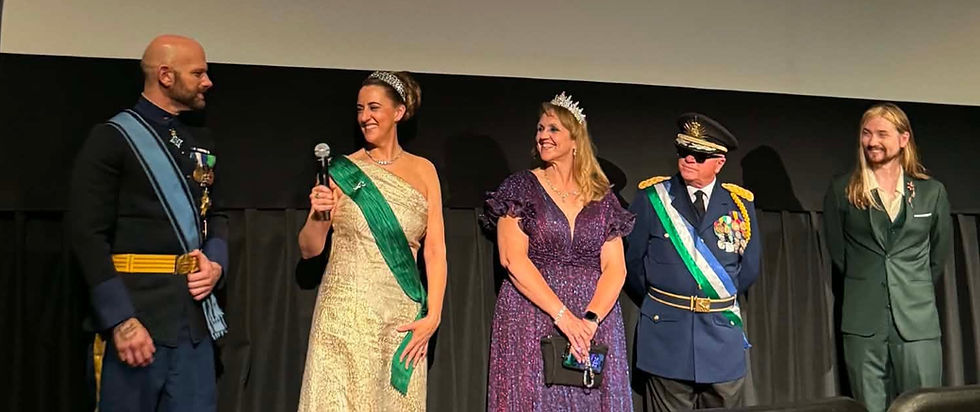
The story truly begins in 2019 when he organizes a symbolic coronation ceremony in the Nydegg Church in Bern. Crown, sword, titles, and royal protocol: all the hallmarks of a monarchy are meticulously reproduced. Unlike many humorous or purely artistic micronations, however, Jonas Lauwiner is not seeking to proclaim Switzerland's actual independence. His approach is different: it consists primarily of exploiting the country's administrative and legal mechanisms.
Because behind the monarchical folklore lies a methodical strategy. For several years, Jonas Lauwiner has been interested in abandoned plots of land or land without clearly identified owners. By using certain procedures of Swiss land law, he has managed to acquire an impressive number of plots spread across several cantons. According to various Swiss and French media outlets, he now controls more than 140 plots representing several dozen hectares.

The affair might have remained anecdotal had some of these acquisitions not involved paths, roads, or access areas used by local communities. Lauwiner reportedly offered to buy back roads from certain municipalities, which had become his property, and even suggested renaming some streets in his honor. This situation is serious enough to prompt several political leaders to consider legislative changes to address what they now see as a loophole in the system.
This very concrete dimension distinguishes Jonas Lauwiner from the majority of actors in the micronational world. While many develop primarily cultural or diplomatic projects, he relies on very real territorial possessions and an assertive local political presence. He has even managed to secure a municipal seat in his region, further blurring the lines between micronation, political satire, and public action.

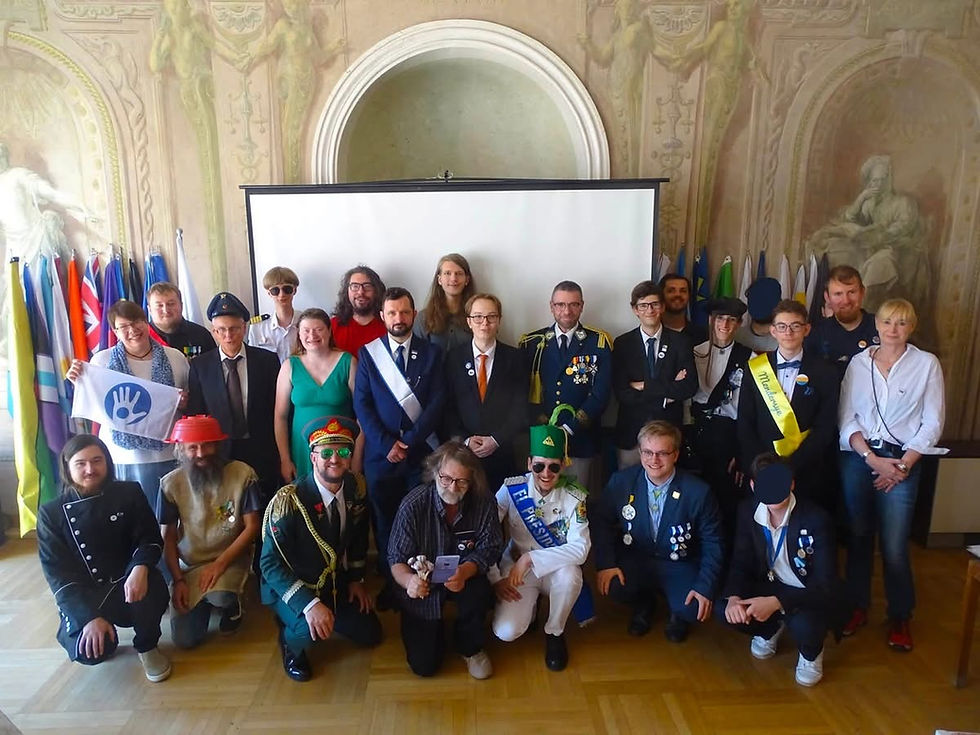
Within the micronational community, Jonas Lauwiner remains a relatively isolated figure. Like the Principality of Seborga or the Principality of Sealand, his "kingdom" maintains virtually no diplomatic relations with other micronations. The Lauwiner Empire thus operates in a form of protocol-driven self-sufficiency, largely ignoring major international intermicronational networks and organizations such as Microfrancophonie, the Micro-Euro-Summit, or MicroCon.
This stance contributes to the mystique surrounding him. Some observers see him as a skillful provocateur using monarchical symbols to denounce Swiss bureaucratic inefficiencies. Others, on the contrary, consider him to represent a new evolution of the micronational phenomenon: that of a self-proclaimed sovereign capable of transforming a symbolic performance into genuine territorial and political influence.
Whether one considers him a visionary, an opportunist, or simply an eccentric, Jonas Lauwiner has now become much more than a folkloric curiosity. His journey demonstrates, once again, that contemporary micronationalism can sometimes leave the realm of mere imagination to confront directly the realities of law, property, and local power.


Commentaires